
 Daniel Carter
If I had to define what an SEO company (or SEO agency) is in the shortest possible way I would say an SEO company helps businesses get more visibility, traffic, leads and revenue from organic search.
That usually involves improving how well a website can be crawled, indexed, understood, trusted and ranked by search engines like Google. In plain English, they help your website show up when the right people are searching for what you sell.
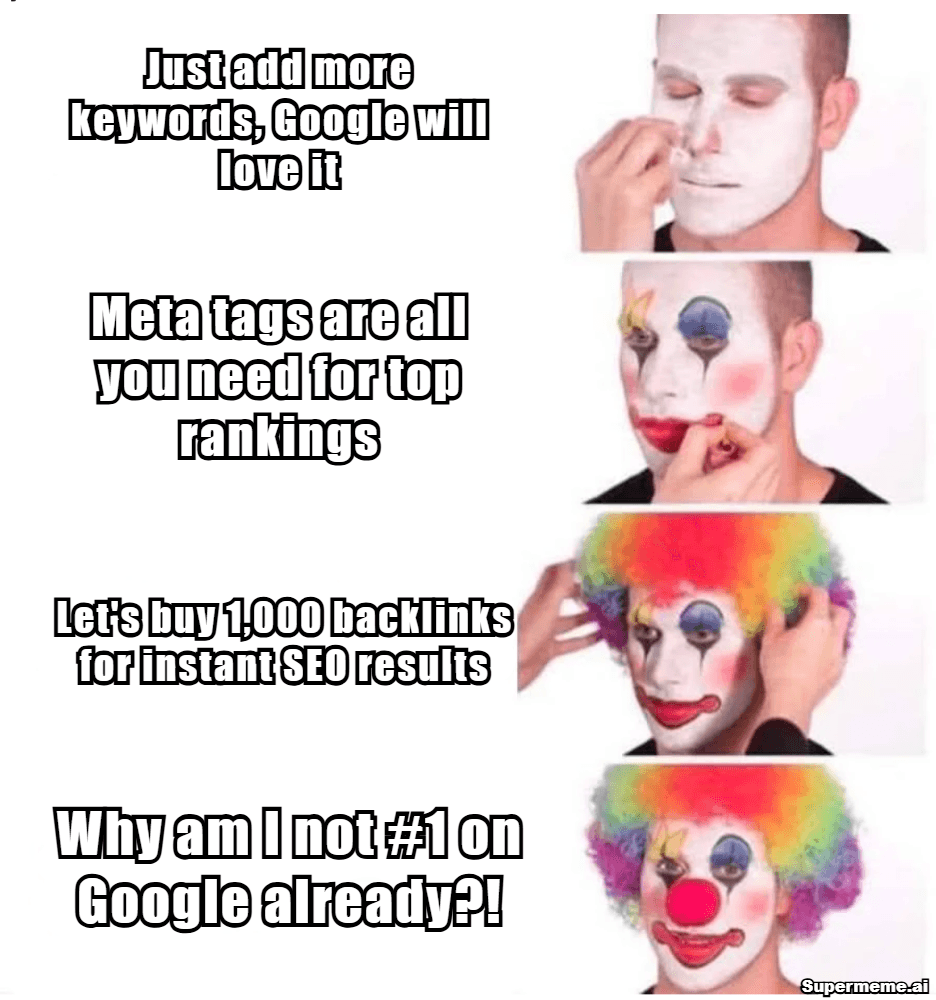
A good SEO company does not just fix technical issues, write content or “adding keywords in to page elements” or send over a monthly ranking report. They diagnose (through the process of an SEO audit) what is holding the site back, prioritise the work that will make the biggest difference, then help implement it across content, technical SEO, digital PR, internal linking, site structure, user experience and measurement.
The best SEO companies are part strategist, part analyst, part content team, part technical partner and part commercial advisor.
It's important to know that SEO is a combination of multiple disciplines and that often means multiple different people/teams involved with expertise in specific areas i.e. technical SEO specialists, professional content writers, outreach & digital PR specialists, developers + more.
Poorer quality SEO companies tend to just send automated reports, write thin content, build questionable links and hope you do not ask too many questions. For a long time - getting clicks was easy via blog SEO - so even poorer quality agencies could get clicks - but whether they generated revenue was a totally different story.
The difference matters.
What is an SEO company?
An SEO company is a specialist business that helps other businesses improve their organic search performance. Most agencies globally focus on Google, however some countries such as China use search engines such as Baidu, Russia has Yandex etc.
Organic search is the unpaid section of search results. So when someone searches Google for a product, service, problem, location or question, SEO is the work that helps your site appear in those results without paying for every click. However it is worth noting that SEO is often classed as "non paid search", but the reality is, it's a paid channel, SEO costs, it's just the model is different, you aren't paying Google ads for clicks, you are paying for specialists to help generate "free" clicks from search.
The general consensus is - organic clicks at scale are more likely to generate a positive and compounding return on investment.
An SEO company may help with:
Understanding what your audience searches for
Improving your website structure
Fixing technical issues
Creating or improving content
Optimising pages for search intent
Building authority and trust
Improving local visibility
Tracking rankings, traffic, enquiries and revenue
Advising on site migrations, redesigns and growth strategy
The important bit is this: SEO is not one single task, it's a complex interplay of different skillsets.
It is a combination of research, strategy, technical work, content improvement, authority building and measurement. That is why a good SEO company should not be judged by whether they “do SEO”, but by how well they understand your market, your website, your commercial goals and the work needed to move the numbers.
SEO is like cogs in a machine - all of them need to work together for it to work properly, one small cog can stop everything from working - this is why SEO often has multiple points of failure from a lack of SEO expertise to budget issues leading to low quality link building.
What does an SEO company actually do?
An SEO company usually starts by working out three things:
Where your site is now
What is stopping it from performing better
Which actions are most likely to improve rankings, traffic and revenue
From there, the work usually falls into a few core areas.
1. SEO audit and diagnosis
We're a tad biased here as we offer SEO audits for clients and our audit brand ranks #1 for SEO audits in Google :)
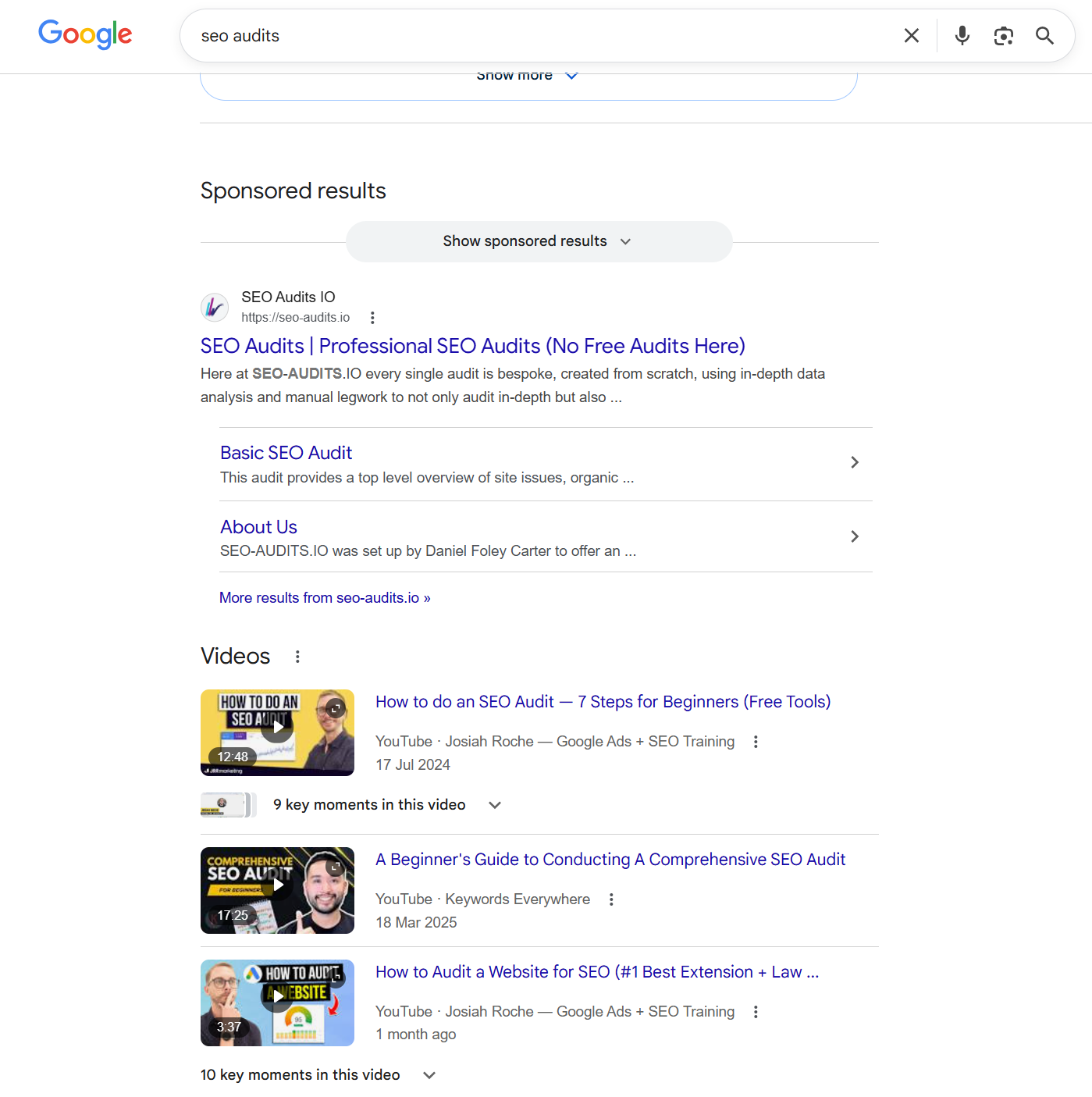
Anyway, enough gloating!
The seo audit is the starting point. This is where an SEO company/agency reviews your site to understand what is working, what is broken and where the biggest opportunities are.
This might include checking:
Whether Google can fetch, crawl and index your important pages
Whether your site has technical issues i.e. rendering issues, broken links etc.
Whether your content matches search intent
Whether pages are competing with each other
Whether your internal links support the right pages
Whether your site has enough topical depth
Whether your competitors are doing something better
Whether rankings are being held back by weak authority, poor content, technical friction or poor site structure
A weak agency turns this into a 100-page automated PDF - often using run of the mill SEO tools or platforms, or, now (moreso) using AI to spit out generic recommendations. You can also get less experienced SEOs within an agency pushing out generic SEMRUSH reports / exports or just taking snapshots from AHREFS site auditing tools.
A strong agency turns an audit into a clear action plan with clear priorities, goals, technical debt, effort requirements etc.
That is the difference. The value is not finding every possible issue. The value is knowing which issues matter, which can wait, and which are likely to move performance.
2. Keyword and search intent research
Keyword research is not just finding words with search volume.
A good SEO company looks at what people are actually trying to do when they search. Are they researching? Comparing? Looking for a local provider? Ready to buy? Trying to solve a problem? Looking for a definition?
For example, someone searching “what is an SEO company” is probably not ready to sign a contract today. They are trying to understand what an agency does, whether they need one, and what to expect.
Someone searching “SEO company for ecommerce websites” is much closer to choosing a provider.
The SEO company’s job is to map these searches to the right pages. Informational searches need helpful guides. Commercial searches need service pages. Local searches need location relevance. Product searches need category or product pages.
Without this step, businesses often create content that gets traffic but not customers.
It's also important to know that there are HUGE fallacies with modern day keyword research, primarily because:
Third party tools often give grossly inaccurate search volume estimates
and
There are literally millions of ZSV (zero search volume queries) searched every day that are never recorded in third party tools - although you can find these golden nuggets burried in your Google search console data
3. Technical SEO
Technical SEO is the work that helps search engines access, crawl, render, understand and index your website properly. SEO companies sometimes have dedicated technical SEOs who primarily focus on technical SEO, whilst others may have broder general SEOs who do everything (tech SEO, content, links etc).
The weapon(s) of choice for technical SEO for most seo companies tends to be:
Screaming Frog SEO Spider
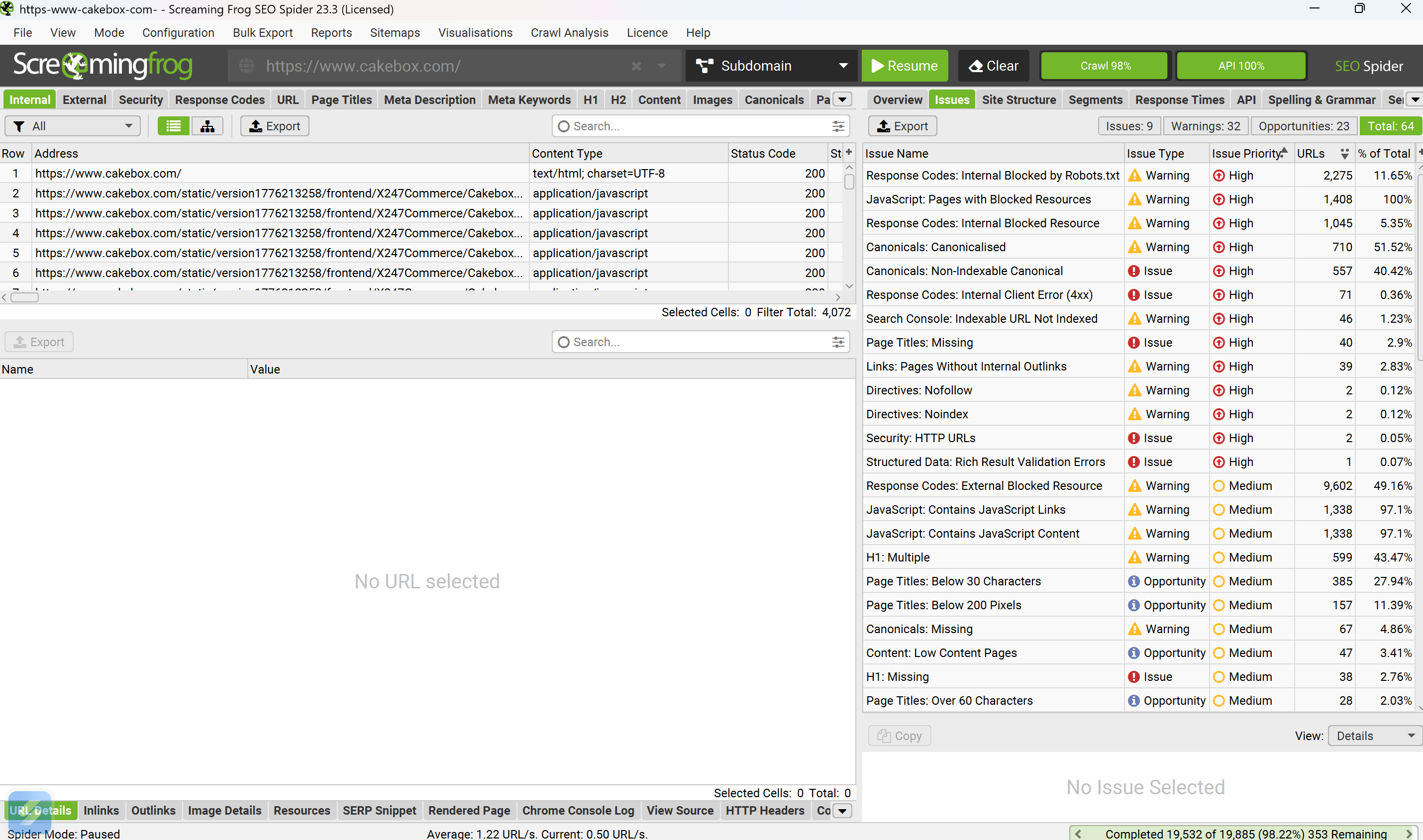
This is one of my favourite SEO tools personally, we use it within our seo agency.
AHREFS site auditor
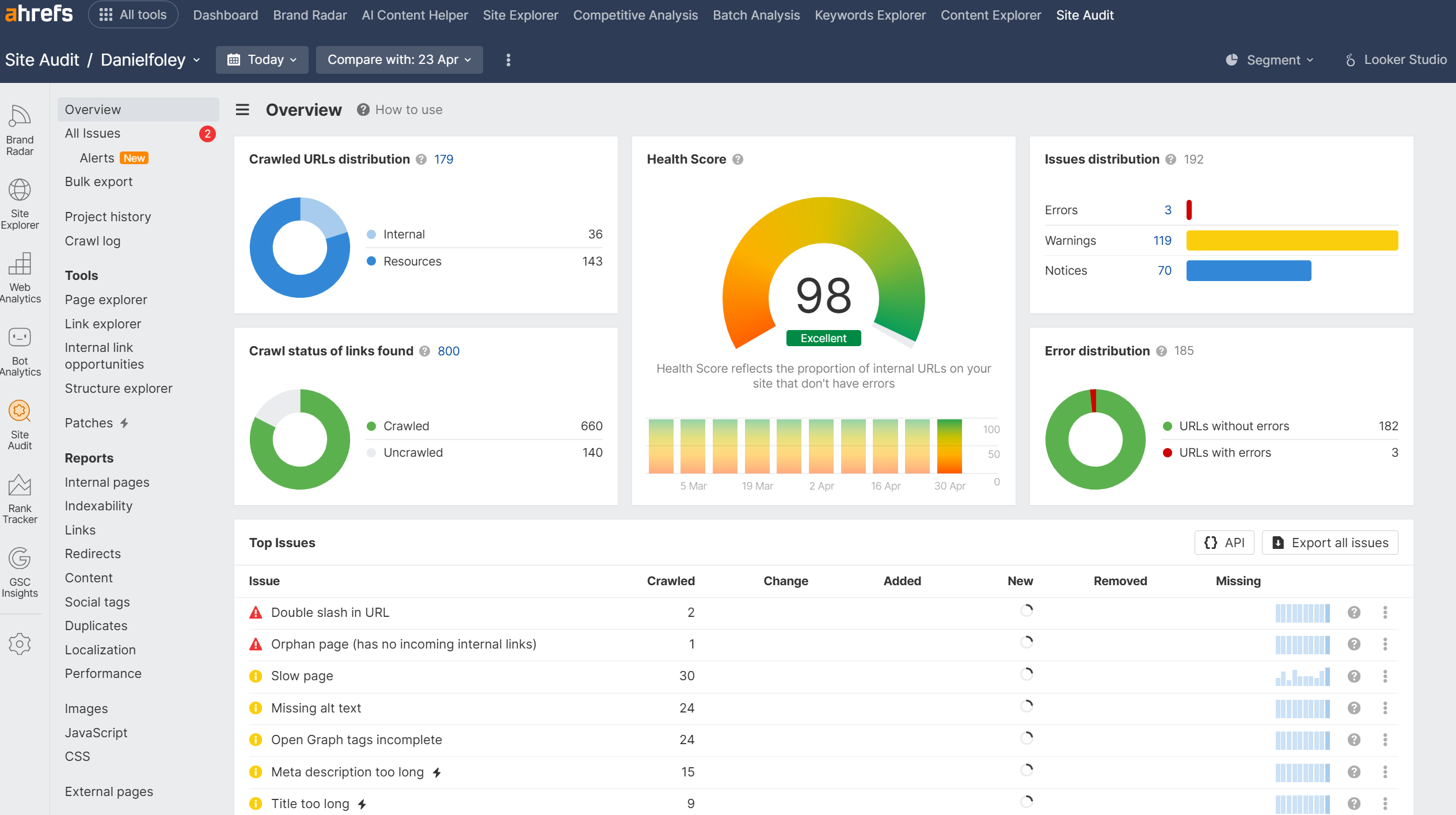
A good tool in general, but specialists tend to want to crawl desktop side (unless the site is huge)
Sitebulb
Another great SEO tool for large crawls!
So back to the technical SEO basics - there's a lot more to this, but top level:
This can include:
Crawlability and indexation
Site speed and Core Web Vitals
JavaScript rendering issues
Internal linking
Canonicals
Redirects
XML sitemaps
Robots.txt
Structured data
Duplicate content
Pagination
Faceted navigation
International SEO
Site migration support
Tech SEO matters because even great content can underperform if the technical foundation is poor or has fundamental issues.
For example, if key pages are blocked, duplicated, poorly linked, too slow, heavily reliant on client-side rendering or buried deep in the site, Google may struggle to process them properly.
A good SEO company will not obsess over technical fixes for the sake of it. They will focus on technical changes that help search engines and users reach the important parts of the site.

4. Content strategy and content improvement
Content is where a lot of SEO success is won or lost. I've spent 20+ years dealing with website content and it is categorically a breaking point for a lot of SEO strategies, moreso since Google got smarter (rankbrain, BERT, MUM, Gemini etc)
Your typical SEO company may create new content, improve existing content or remove content that is thin, outdated or not useful.
This can involve:
Rewriting service pages
Expanding thin pages
Creating comparison content
Building topic clusters
Improving product and category pages
Adding FAQs
Improving headings and page structure
Updating old content
Consolidating overlapping pages
Adding expert input
Improving readability and trust signals
The aim is not to publish more content for the sake of it.
The aim is to make your site a better answer than the pages currently ranking.
That means depth, clarity, usefulness, experience and commercial relevance. Google’s own guidance says content should be helpful, reliable and created for people, not just made to manipulate rankings.
Content is literally the backbone of SEO and subsequently, producing good quality content is more about the user than for search - Google is significantly better at understanding documents and moreso, the behavioural signals that surround ranked content (this is how Google can work out if content is helpful or not - using behaviour data aggregated from Google Chrome).
We're in 2026, so, now is the generational boom of AI SLOP with a lot of SEO companies taking advantage of generating content using AI as opposed to using specialists.

5. On-page SEO
On-page SEO is the process of improving individual pages so they are clearer, more relevant and easier for search engines and users to understand. This is technically part of technical SEO, but this is more about forward planning when producing content and then tagging it up accordingly (and making sure it meets all the right criteria - structured data, content intent, NLP etc. etc)
This includes things like:
Page titles
Meta descriptions
Headings
Intro copy
Internal links
Image alt text
Content structure
Schema markup
Calls to action
Topical coverage
Search intent alignment
This is where small details can make a noticeable difference.
For example, a page might already be ranking on page two, but the title does not match the query well, the content misses key subtopics, and the page does not internally link to supporting resources. A good SEO company will spot that and improve the page with purpose.
6. Authority, backlinks and digital PR
Search engines use links and brand signals to help understand authority and trust. This is probably one of the most abused areas in the SEO space. This is really where the difference between low budget seo companies and more prestigious or larger agencies can be seen - to put it simply, if the agency doesn't have the budget they'll cut corners on links - often using spammy or low quality link building techniques to try and gain rank (often unsustainable).

An SEO company may help improve a clients brand and link/domain authority via:
Digital PR
Link earning campaigns
Content promotion
Resource link building
Local citations
Partnerships
Brand mentions
Expert commentary
Reclaiming lost links
Fixing broken backlinks
This is one of the areas where agency quality varies massively.
Good link building is relevant, earned and brand-safe. Poor link building is usually cheap, spammy and risky.
If an SEO company promises hundreds of links for a tiny budget, be careful. Google’s spam policies are clear that manipulative practices can cause pages or entire sites to rank lower or be removed from search results.
7. Reporting and performance analysis
SEO reporting should tell you what changed, why it changed and what should happen next.
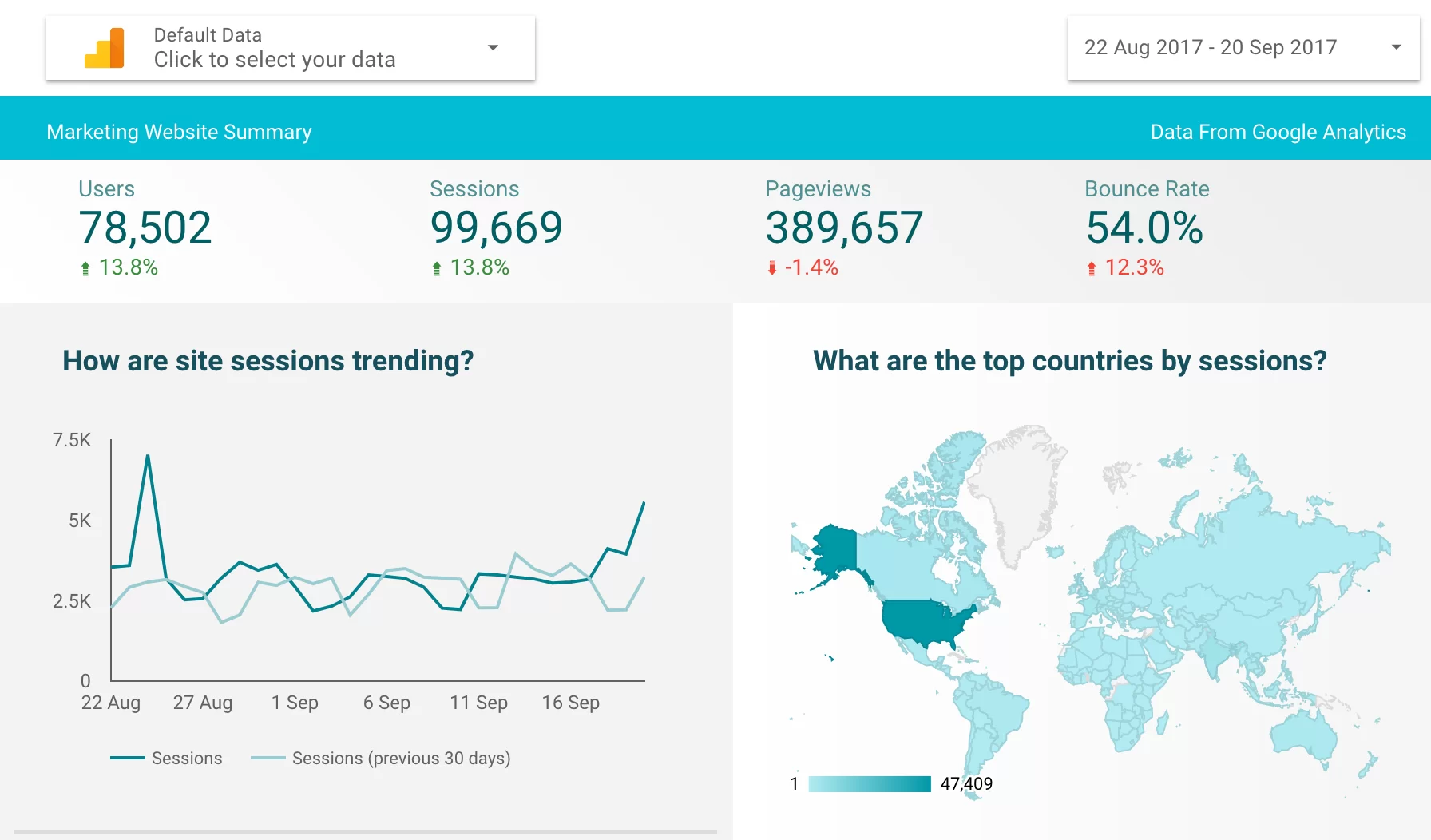
A lot of traditional SEO reporting primarily focused on ranking reports, work reports and custom dashboards in google analytics or google's looker studio, sorry, data studio (they keep renaming it).
Useful reporting normally includes:
Organic traffic
Rankings
Leads or sales
Revenue where tracking is available
Conversions
Search Console clicks and impressions
Page-level performance
Keyword groups
Technical issues resolved
Content published or improved
Work completed
Next actions
Poor SEO reporting focuses on vanity metrics - things that don't really translate into numbers such as revenue, enquiries etc.
Good SEO reporting explains cause and effect whilst providing an overview on rankings, visibility and how things are moving in respect of growing ROI.
For example, “traffic increased by 20%” is not enough. Which pages grew? Which queries improved? Did enquiries increase? Was the traffic relevant? Did revenue move? Was the uplift caused by content changes, technical fixes, seasonality, branded search, or something else?
That is the level of clarity a good SEO company should bring.
How does an SEO company work?
Most SEO companies follow a process, although the quality and depth of that process varies. Sorry - had to drop another meme here:

A typical SEO engagement looks like this.
Step 1: Discovery
The agency learns about the business.
This usually includes:
What you sell
Who your customers are
Your most profitable services or products
Your target locations
Your competitors
Your current marketing activity
Your sales process
Your margins
Your tracking setup
Your past SEO work
Your internal resources
This step matters because SEO should not be separate from the business.
There is no point driving traffic to low-margin services if your real goal is to grow high-value enquiries. There is no point chasing high-volume keywords if they bring the wrong audience. There is no point recommending 40 new pages if your team cannot approve or publish them.
A good agency asks commercial questions before it starts giving SEO answers.
The other thing to note is that generally, agencies SHOULD size up the client, their niche, current organic visibility and budget - because its crucial at the outset to ensure the budget is going to be sufficient to get a proper job done without cutting corners or mismanaging client expectations.
Step 2: Audit and opportunity analysis
Next, the agency reviews the website, search data and competitors. The quality of the SEOs should become apparent in this phase, as SEOs get involved and begin to audit, the quality of their output and their strategic path may be a good indicator as to the quality of the seo agency you are dealing with!
This is where they identify the main constraints and opportunities. Sometimes the issue is technical. Sometimes it is content quality. Sometimes it is authority. Sometimes the site is targeting the wrong keywords. Sometimes the real problem is that the website has no clear proposition.
The agency should then separate findings into priorities.
Not everything needs fixing immediately. Some issues are urgent. Some are nice-to-have. Some will not move the needle at all.
This is where experience matters, and this is why finding the right SEO company is notoriously hard for a lot of businesses, a lot of it comes down to:
Client v Agency fit
Client willingness to work with the agency (i.e. feedback, invest, get things okayed)
Agency SEO expertise
Agency broader resource expertise (dev, content writers etc)
Step 3: Strategy
The strategy should explain how SEO will help the business grow.

It should answer:
Which keyword groups matter most?
Which pages need to be created or improved?
Which technical issues need fixing first?
Which competitors are setting the benchmark?
What content is missing?
What does success look like?
What work needs to happen in the first 30, 60 and 90 days?
What can be done by the agency, and what needs the client’s team?
A proper SEO strategy is not a list of vague actions. It is a decision-making framework.
It tells everyone what matters, what does not, and why.
Step 4: Implementation
This is where the work gets done.
Depending on the agency and the client, implementation may involve:
The agency making changes directly
The agency sending recommendations to developers
The agency briefing writers
The agency creating content
The client approving changes
The agency supporting internal teams
Developers implementing technical fixes
Designers improving templates
PR teams supporting link acquisition
This is also where many SEO campaigns slow down.
Not because the strategy is wrong, but because recommendations sit in a spreadsheet and never get implemented.
A good SEO company should help push work through, not just point at problems.
Step 5: Measurement and iteration
SEO is not set and forget.
After changes go live, the agency should monitor what happens. Some changes work quickly. Some take months. Some need refinement. Some do not work as expected.
The agency should look at the data and adjust.
That might mean rewriting a page again, changing internal links, improving titles, consolidating content, building more authority, expanding a topic cluster, or shifting focus because the original opportunity was not as strong as expected.
This is how SEO actually works in the real world: research, prioritise, implement, measure, refine.
What services should an SEO company provide?
A good SEO company does not need to offer every service under the sun, but it should be clear about what it does and how that work supports growth.
Common SEO services include:
SEO audits
A review of your website’s technical health, content, rankings, competitors, site structure and opportunities.
Technical SEO
Fixing crawl, indexation, speed, rendering, structured data, internal linking and site architecture issues.
Content strategy
Planning the pages, topics and content improvements needed to reach the right audience.
Content creation
Writing or briefing content that matches search intent and supports commercial goals.
On-page optimisation
Improving titles, headings, internal links, copy, schema and page structure.
Local SEO
Improving visibility in local searches, Google Business Profile results, maps and location-based queries.
Ecommerce SEO
Improving category pages, product pages, faceted navigation, internal linking, product content and technical setup.
Digital PR and link building
Earning links, mentions and authority from relevant websites.
SEO reporting
Tracking performance and explaining what has happened, what has been done and what comes next.
SEO consulting
Providing expert guidance for migrations, redesigns, strategy, internal teams or specific technical/content challenges.
Is it worth paying an SEO company?
It can be, but not always.
Paying an SEO company is worth it when the agency has the skill, process and accountability to improve performance in a way that supports your business goals.
It is usually worth considering if:
Your website gets little organic traffic
Your competitors dominate Google
You are over-reliant on paid ads
You do not have in-house SEO expertise
Your site has technical or content issues
You are planning a migration or redesign
You have a strong product or service but poor visibility
You need a long-term source of inbound leads or sales
It may not be worth it if:
You have no budget to implement recommendations
You expect instant results
Your website or offer is not ready
You only want “cheap SEO”
You are not willing to create, improve or approve content
You cannot track leads, sales or meaningful outcomes
SEO is not magic. It is not instant. And it is not always the right first marketing channel for every business.
But when the website, market, budget and execution are aligned, SEO can become one of the strongest long-term acquisition channels a business has.
How much does an SEO company cost?
SEO pricing varies depending on the type of business, competition, scope and agency.
A small local business might need a relatively focused monthly campaign. An ecommerce website with thousands of products may need technical SEO, content, digital PR and development support. A national or enterprise brand may need multiple specialists across technical SEO, content strategy, analytics and stakeholder management.
The cost usually depends on:
How competitive your market is
How large your website is
How much content is needed
How much technical work is required
Whether link building or digital PR is included
Whether the agency is strategic, executional or both
How senior the team is
Whether reporting and analytics are included
Whether developers are needed
The better question is not “how much does SEO cost?”
The better question is “what level of work is needed to compete, and what would a good return look like?”
Cheap SEO usually becomes expensive when it creates poor content, weak links, technical mess or months of wasted time.
How do SEO companies make money?
SEO companies usually make money in a few ways.
Monthly retainers
This is the most common model. The client pays a monthly fee for ongoing SEO work, reporting and strategy.
Project fees
This is common for audits, migrations, keyword research, content plans or one-off technical projects.
Consultancy
Some companies pay for strategic advice rather than full delivery.
Performance-based SEO
Some agencies charge based on results, but this model can be complicated. It depends on how performance is measured and whether the agency controls enough of the work to be fairly judged.
Hybrid models
Some agencies combine a base retainer with project work, content production, digital PR or development support.
There is nothing wrong with an SEO company making a profit. The issue is whether the client is getting meaningful work, clear thinking and measurable progress in return.
What makes a good SEO company?
A good SEO company should be able to explain what they are doing in plain English.
You should expect:
Clear diagnosis
Honest prioritisation
Commercial understanding
Strong technical knowledge
Good content judgement
Transparent reporting
Realistic expectations
Evidence-led recommendations
No risky shortcuts
Clear ownership of actions
Regular communication
A focus on leads, sales or business value, not just rankings
They should also be comfortable saying “no”.
No, you should not publish 100 weak AI pages.
No, that keyword is not worth chasing.
No, those links are not safe.
No, rankings alone are not the right KPI.
No, your issue is not metadata, it is that your content is not good enough.
That honesty is valuable.
Red flags when choosing an SEO company
Be careful if an SEO company:
Guarantees number one rankings
Promises instant results
Cannot explain what they will actually do
Focuses only on rankings
Sends vague automated reports
Offers suspiciously cheap link building
Talks about secret methods
Does not ask about your business
Does not discuss implementation
Produces generic content
Avoids talking about revenue or leads
Uses scare tactics to close the sale
Will not show examples of work
Has no clear process
SEO should feel clear, not mysterious.
If you are paying an agency every month and still do not understand what they are doing, that is a problem.
Can you do SEO yourself?
Yes, you can do SEO yourself, especially if your website is small and your market is not too competitive.
You can learn the basics of:
Keyword research
Page titles
Content improvement
Internal linking
Google Search Console
Technical checks
Local SEO
Basic reporting
For many small businesses, doing the basics properly is enough to make progress.
But SEO becomes harder when:
Your competitors are strong
Your website is large
You have technical issues
You are migrating platforms
You need content at scale
You operate in multiple locations
You sell hundreds or thousands of products
You need senior strategy
You do not have time to execute
At that point, hiring an SEO company can save time, reduce mistakes and help you focus on the work that matters.
Will AI replace SEO companies?
AI will change SEO companies, but it will not remove the need for good SEO expertise.
AI can help with research, content briefs, data analysis, clustering, ideation, reporting and technical checks. It can speed up parts of the process.
But AI does not automatically understand your business, your margins, your customers, your market positioning, your technical constraints or your internal politics.
It also does not magically know which recommendation is worth implementing.
The future of SEO companies is not “humans versus AI”.
It is good SEO teams using AI well, while still applying judgement, experience and commercial thinking.
The agencies that only sold basic content and reports will struggle. The agencies that can diagnose, prioritise, advise and execute will still be valuable.
What are the 4 types of SEO?
The four most commonly discussed types of SEO are:
Technical SEO
This focuses on crawlability, indexation, speed, site structure, rendering, schema and technical performance.
On-page SEO
This focuses on improving individual pages, including titles, headings, content, internal links and search intent alignment.
Off-page SEO
This focuses on authority, backlinks, digital PR, mentions and external trust signals.
Local SEO
This focuses on improving visibility in local searches, including Google Business Profile, local landing pages, reviews, citations and map results.
There are other categories too, such as ecommerce SEO, international SEO, enterprise SEO and SaaS SEO, but most work fits somewhere inside technical, on-page, off-page and local SEO.
Does a small business need SEO?
Many small businesses need SEO, but not all need the same level of SEO.
A local plumber, solicitor, dentist, accountant or trades business may benefit from local SEO, Google Business Profile optimisation, service pages, reviews and location content.
A small ecommerce business may need category optimisation, product content, technical fixes and authority building.
A consultant or B2B service provider may need educational content, service pages, case studies and comparison content.
The key is matching the SEO strategy to the business model.
Small businesses do not need bloated SEO campaigns. They need focused work that helps the right people find them.
Can ChatGPT do an SEO audit?
ChatGPT can help with parts of an SEO audit, but it should not be treated as a replacement for proper SEO analysis.
It can help review page copy, suggest content improvements, cluster keywords, generate title ideas, explain technical issues and structure recommendations.
But a proper audit needs real data from tools such as Google Search Console, analytics platforms, crawlers, rank trackers, log files and backlink tools. It also needs human judgement.
ChatGPT can support an SEO audit.
It should not be the whole audit.
How do you choose the right SEO company?
Choose an SEO company based on clarity, experience, process and fit.
Ask questions like:
What would you do first and why?
How do you decide priorities?
Who will actually work on the account?
What does the first 90 days look like?
What will you need from us?
How do you measure success?
Can you show examples of similar work?
How do you handle technical implementation?
Do you create content, brief it, or advise only?
How do you approach link building?
What should we not expect from SEO?
A good agency will answer these questions clearly.
They will not hide behind jargon.
Final thoughts
An SEO company helps businesses grow through organic search, but the quality of the company matters far more than the label.
Some agencies are strategic, commercially aware and genuinely useful. Others are little more than reporting machines.
The best SEO companies understand that rankings are not the end goal. The real goal is visibility that turns into qualified traffic, trust, enquiries, sales and long-term growth.
Good SEO is not about tricking Google.
It is about making your website easier to find, easier to understand, more useful, more trusted and more aligned with what your customers are already searching for.
That is what an SEO company should do.
And if they cannot explain how their work connects to that outcome, they probably are not the right one.