
 Daniel Carter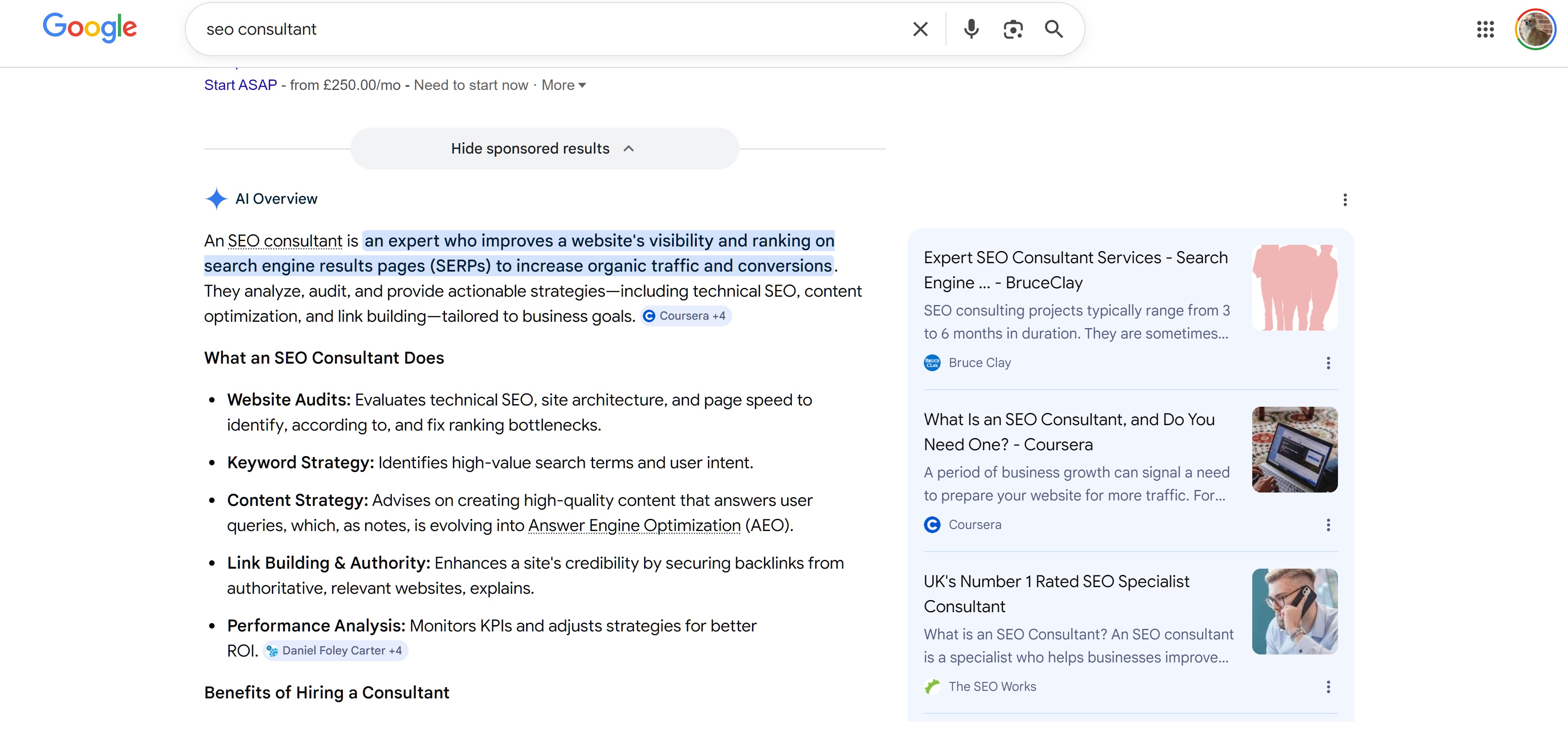
How to Rank in Google AI Overviews: What the Data Actually Says (and What It Doesn't)
Before getting into tactics, it's worth being honest about what we're dealing with. There is no published ranking algorithm for AI Overviews, and Google has been clear that standard Search fundamentals continue to apply. Everything else is correlational, drawn from third-party studies of citations rather than confirmed signals. Some of those studies disagree, sometimes substantially. The numbers also keep moving: a finding from July 2025 has often been overwritten by a finding from February 2026 because Google updated the underlying model.
What follows is my own synthesis of the most reliable research available, with sources you can verify yourself, alongside what I've observed across client sites since AI Overviews started rolling out. I've tried to flag where the evidence is strong, where it is suggestive, and where we are guessing.
If you want a single sentence to anchor the rest: rank for the topic broadly, structure your content so passages can be lifted out cleanly, build entity signals beyond your own domain, and accept that even when you do all of this, citations will fluctuate.
To note - I have done a LOT of testing to rank in AI overviews, there are a number of things to consider - first and foremost that AI OVERVIEWS are NOT consistent, you won't get the same results day in / day out, the sites being cited tend to change on a regular basis - stronger performing sites tend to appear more regularly but will still find positions bouncing around - here's me ranking my own consultancy site in an AI Overview:
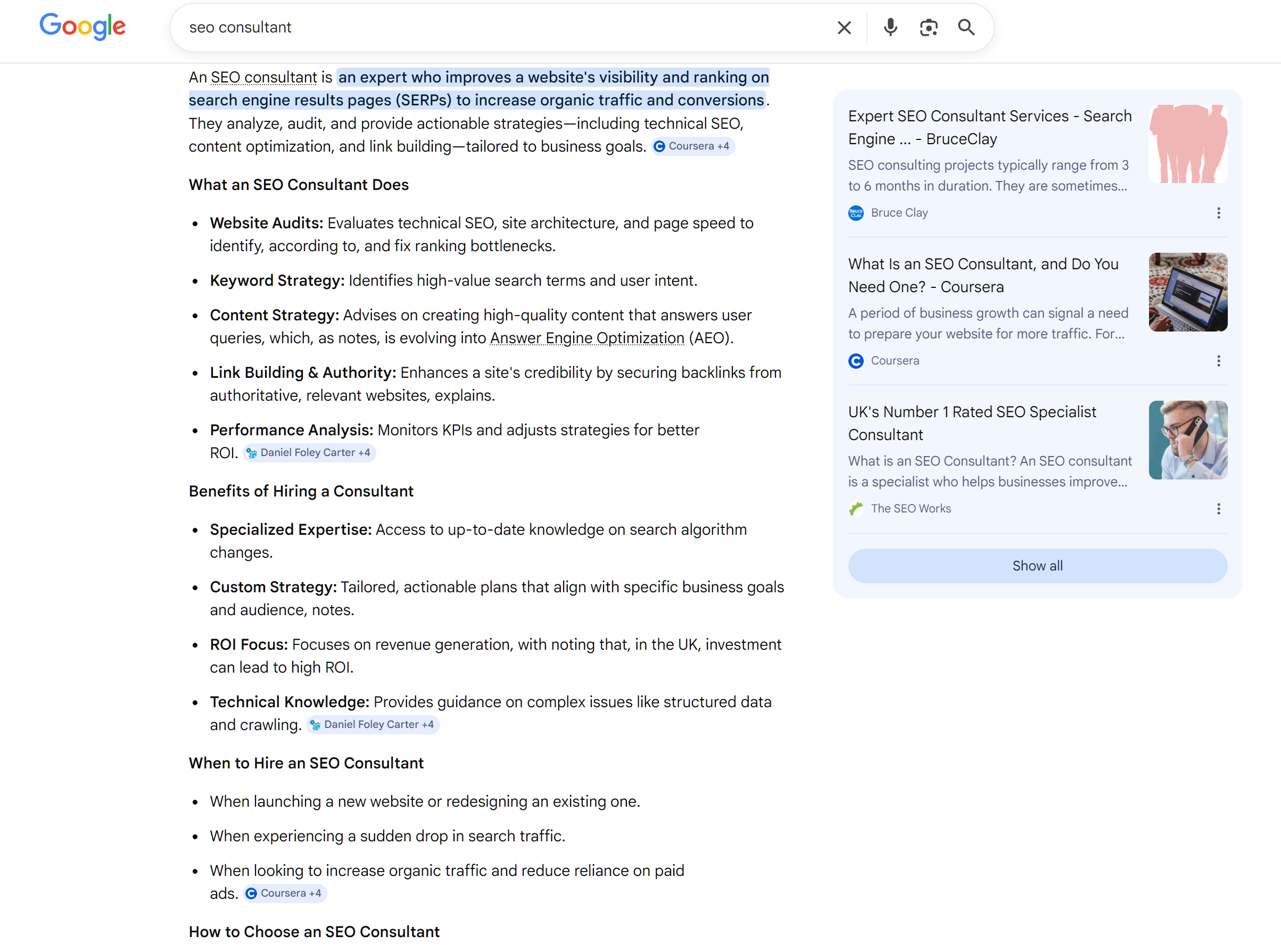
I don't "profess" to be an expert in ranking in Google AI Overviews - because, quite simply NO ONE knows how to consistently rank, it's more of a broad consensus in that if you have good solid content and strong links / trust in domain you are FAR more likely to be citable in an AI overview.
What an AI Overview actually is
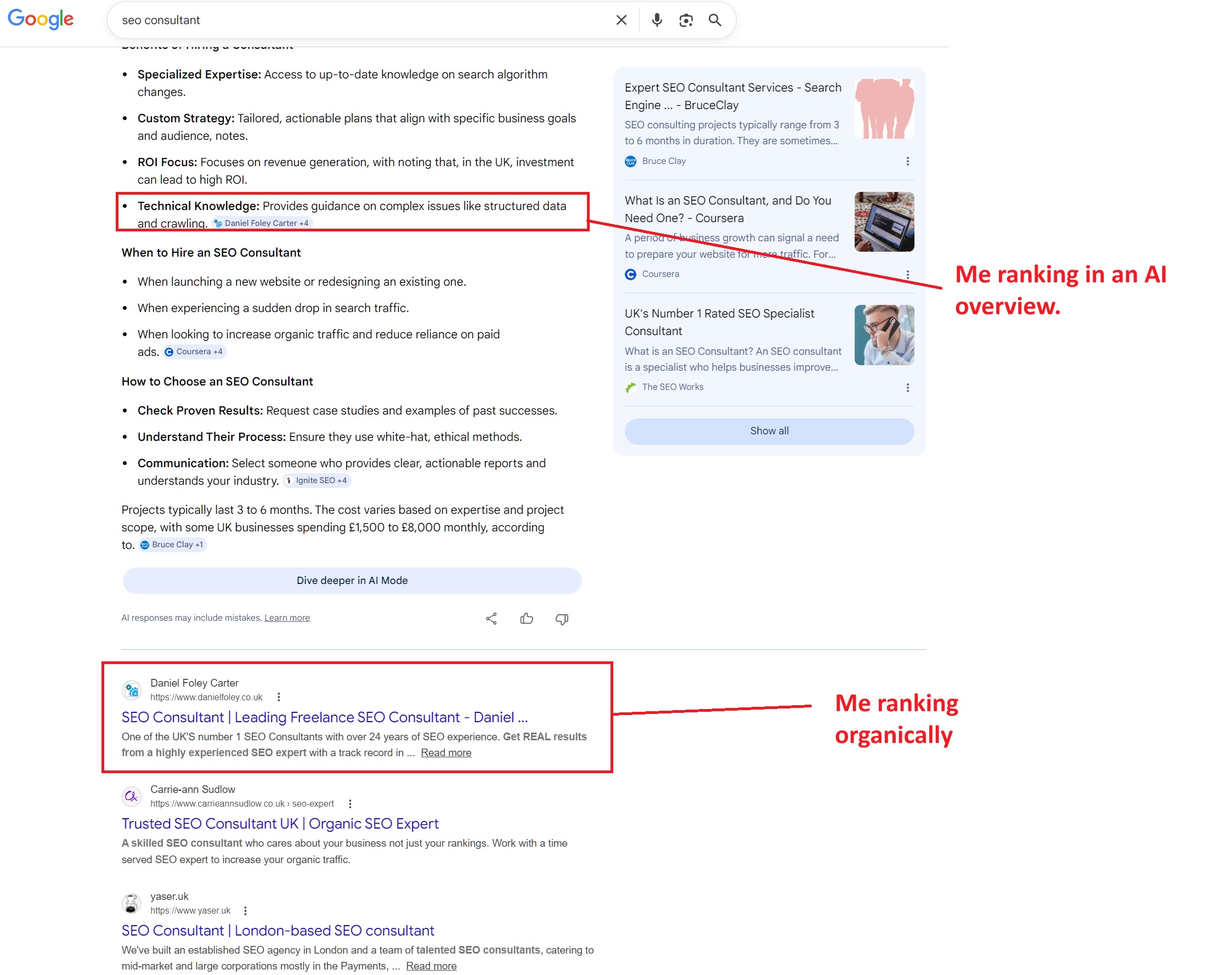
An AI Overview is the AI-generated answer block that sits above the traditional results for an increasing share of queries. It pulls from multiple sources, summarises them, and links out to between roughly three and ten cited URLs depending on the query. Google's research lead Liz Reid confirmed at I/O 2025 that AI Overviews and AI Mode now use a custom version of Gemini 2.5, with a global default upgrade to Gemini 3 on 27 January 2026 (Google blog).
Two pieces of context matter:
It is not a separate ranking system. Google has repeatedly confirmed there is no separate AI Overviews algorithm. The same crawlability, indexing, helpfulness, and quality signals that determine organic ranking feed source selection (Google Search Central, May 2025). You may see some claim it is, but, it really isn't!
It runs on query fan-out. Rather than answering the literal query, Gemini decomposes it into multiple sub-queries, retrieves results for each, and synthesises an answer from the combined pool. This is the single most important mechanical detail to understand, because it explains why traditional ranking for the head term is no longer enough on its own.
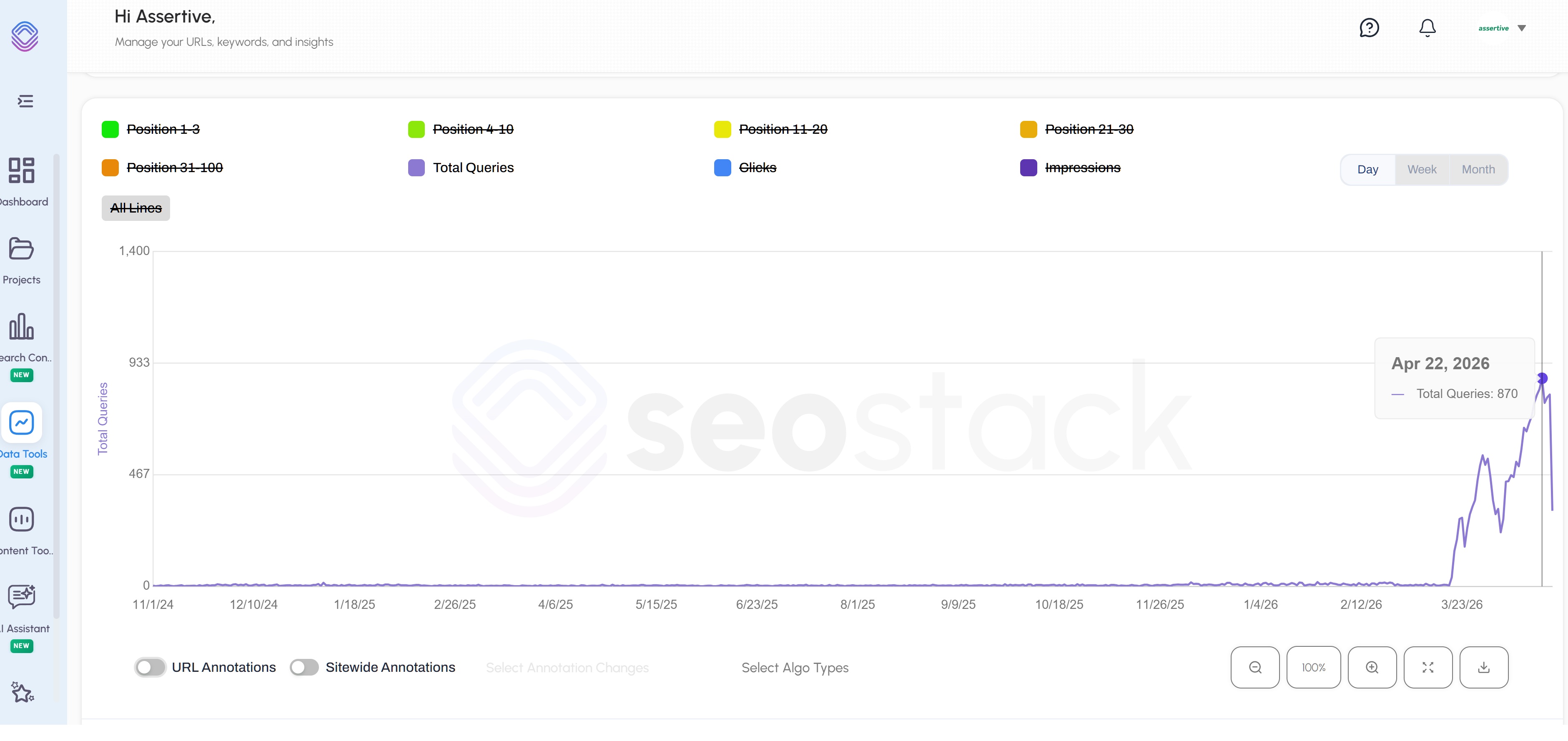
This is why for a while I have been advocating that SEO's embark on QUERY COUNTING which is a process of counting GSC queries for each URL on a domain.
What we know with reasonable confidence
AI Overviews now appear on most informational queries
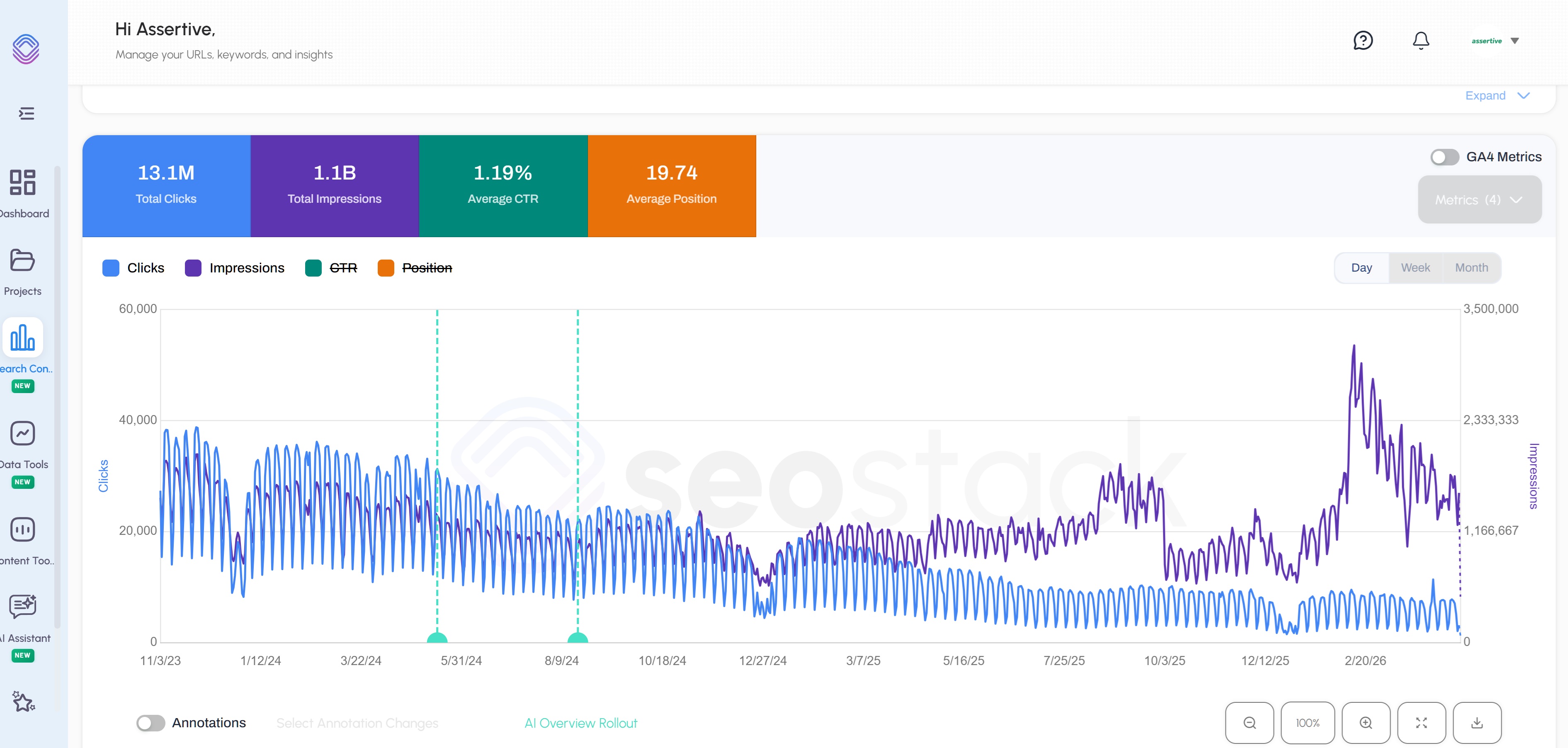
Coverage is between roughly 30% and 60% of US searches depending on the dataset and query mix, with informational and commercial queries triggering them most often (Citedify, We Optimizz). For informational keywords specifically, Ahrefs reports they appear in nearly all of them. We have access to a LOT of websites GSC data in SEO stack, and we see the same thing over and over again - SINCE the roll out of AI overviews, informational clicks have been in decline.
Initially - we saw a 2 stage roll out of AI Overviews (US and then worldwide), THEN, on each subsequent Google core update, AI overview prominence has grown with more and more queries yielding them.
The top-10 correlation has weakened, but ranking still matters
This is one of the more important shifts in the last twelve months. In July 2025, Ahrefs' analysis of 1.9 million citations from 1 million AI Overviews found 76% of cited URLs also ranked in Google's top 10 for the same query, with a median ranking of position 2 for the top-cited URL (Ahrefs, July 2025).
A larger follow-up study (863,000 keywords, 4 million URLs) published in February 2026 showed that figure had dropped to 38%, with the remaining citations split almost evenly between positions 11–100 (31.2%) and pages outside the top 100 (31.0%) (Ahrefs, Feb 2026). A separate BrightEdge analysis put the top-10 overlap even lower at around 17%.
Some of that drop is methodology (Ahrefs improved its parsing) and some is the Gemini 3 upgrade pulling in a wider source pool through more aggressive fan-out. The practical takeaway is the same either way: ranking in the top 10 for a query still gives you the best single shot at being cited for that query, but it is no longer a near-guarantee, and a meaningful share of citations now comes from pages outside the top 100 of the original SERP.
If you cover the topic deeply across multiple URLs and rank well across that cluster, your overall citation share will typically beat a single top-three page that covers the topic shallowly.
Query fan-out is now the core mechanism for source selection
Surfer SEO analysed 173,020 URLs and found that pages ranking for fan-out queries were 161% more likely to be cited in AI Overviews, with a Spearman correlation of 0.77 between fan-out coverage and citation rate (Surfer SEO).
Two things make this difficult in practice:
Google does not expose the fan-out queries used for any given AI Overview.
Surfer's data shows only around 27% of fan-out sub-queries stay stable across repeated runs of the same query.
So you cannot reverse-engineer a definitive list of fan-outs to target. What you can do is cover the topic comprehensively enough that you rank for the broad shape of likely sub-queries, regardless of which ones fire on a given pass.
Click-through rates have dropped, but cited pages still benefit
Ahrefs' updated December 2025 study found AI Overviews correlate with a 58% drop in click-through rate for the top-ranking organic result, up from 34.5% in their April 2025 study (Ahrefs, Feb 2026). Independent figures are similar: Seer Interactive between 49.4% and 65.2%, Authoritas 47.5%.
Cited pages still gain something. Search Engine Land's 2025 analysis showed cited pages earn around 35% more organic clicks and 91% more paid clicks than competing non-cited pages. Google's own position is that clicks from AI Overviews are higher quality, with users spending more time on the destination site (Google Search Central). Both can be true: total click volume falls, but the clicks that come through tend to convert better.
Brand mentions and entity strength correlate more strongly than backlinks
This is the finding that has shifted my thinking most over the last six months. Analysis from multiple sources points the same way: branded web mentions, branded anchor distribution, and consistent entity signals across the wider web correlate more strongly with AI Overview visibility than raw link metrics or domain authority (Passionfruit, Profound, March 2026).
It makes sense once you accept that AI source selection is partly a verification process. The model is checking whether the entity it is about to cite is recognised across the web, not just whether one page ranks for one query.
YouTube has become the single most-cited domain
Ahrefs' Brand Radar data shows YouTube is now the most-cited domain in Google AI Overviews, accounting for 5.6% of all citations and 18.2% of citations that come from outside the top 100 (Ahrefs, Feb 2026). YouTube citations have grown 34% in the last six months. Ahrefs' separate research across 75,000 brands found that mentions on YouTube (in titles, descriptions, and transcripts) were the strongest correlating factor with AI Overview visibility.
Reddit has shown a similar trajectory. SAASstorm's analysis recorded a 450% increase in Reddit's share of AI Overview citations between March and June 2025, reaching 7.15% of all citations.
If your strategy is purely on-domain, you are missing where Gemini is now drawing a meaningful share of its source material.
Density beats length
Dan Petrovic's study of more than 7,000 queries found that grounding (the share of your content used as source material) plateaus at around 540 words and shows diminishing returns past 2,000 words (cited in Ahrefs). Adding more content dilutes the percentage of your page that gets selected without increasing the absolute amount that gets used.
Surfer SEO's analysis of 15,847 AI Overview results found cited articles cover roughly 62% more facts than non-cited ones, and self-contained passages of 134–167 words have the highest citation rates. Core sources (pages cited every time an AI Overview is generated for a topic) cover around 42% of the key facts for that topic.
Translated to writing practice: shorter, fact-dense passages outperform long-form padding. Each section should answer a specific question completely enough that it doesn't need the rest of the page to make sense.
Citations cluster in the first third of articles
Growth Memo's February 2026 analysis found 44.2% of LLM citations come from the first 30% of an article, 31.1% from the middle 40%, and 24.7% from the last third. Lead with the answer; supporting depth comes after.
What you cannot control: the variability problem
This part deserves its own section because most articles on this topic skip past it.
In November 2025, Ahrefs found AI Overviews have a 70% pointwise change rate, meaning the content of a given AI Overview changes 70% of the time between observations. Around 45.5% of cited URLs are entirely new from one observation to the next (Ahrefs).
SparkToro's January 2026 study, run with Patrick O'Donnell of Gumshoe.ai, took this further. They had 600 volunteers run 12 prompts across ChatGPT, Claude, and Google AI Overviews/AI Mode 2,961 times in total. There was less than a 1% chance of getting the same brand list twice for the same prompt, and less than a 0.1% chance of getting the same list in the same order (SparkToro, Jan 2026).
The systems are probabilistic by design. They sample from a distribution of plausible sources rather than returning a fixed list. This is not a bug to be fixed and it is not something you can optimise away. What it means in practice:
Tracking single-prompt visibility is unreliable. Track citation share across many runs and across related prompts.
Variability is highest in fragmented categories with many candidate brands and lowest in concentrated categories with a few dominant players. If you are in a crowded niche, you should expect more volatility than a competitor in a concentrated one.
Stable visibility is a function of being in the consideration set the AI is sampling from, not winning a single position.
What to do, in order of likely impact
The order here reflects my read of the strength of evidence and the difficulty of execution. Higher-impact items earlier; technical details later.
1. Rank organically across the topic, not just for the head term
Top-10 ranking for the exact query is no longer the dominant factor it was, but ranking in the top 100 across a wide set of related queries still appears to be the floor. 86% of cited URLs in Ahrefs' larger dataset rank somewhere in the top 100 for the original or a related query.
Map the topic into clusters. For each commercial or informational pillar, write a pillar page and supporting cluster pages that each rank for distinct sub-questions. The cluster, not any single page, is what competes in the fan-out.
Tools that help with mapping fan-outs: AlsoAsked, Keyword Insights, Ahrefs Keywords Explorer with the "matching terms" and "questions" filters, and Mike King's Qforia, which models Google's fan-out process using the Gemini API.
2. Write for extraction, not for length
Each section of a long article should be readable on its own. The model is pulling passages, not pages.
A practical structure that holds up across the studies I've looked at:
A direct, factual answer to the section's question in the first 1–3 sentences.
100–170 words of substantive supporting detail in the same passage.
Specifics: numbers, dates, names, processes, quantities. Surfer's data showed cited articles cover ~62% more facts than non-cited ones for the same topic.
Avoid hedging openings ("there are many factors", "it depends") at the top of a section. The AI cannot extract a clear answer from those.
Lead each article with the strongest factual content. The first 30% of the page is doing roughly twice the citation work of the last 30%.
3. Build entity strength beyond your own domain
If branded web mentions correlate more strongly with AI Overview visibility than backlinks, then the work shifts from link building toward what was once called PR and what is increasingly being called entity SEO. The practical components:
Consistent name, role, and topic association across multiple authoritative third-party sites.
Wikipedia presence (more relevant for ChatGPT than for AI Overviews specifically, but still useful).
Inclusion in "best of" listicles in your category. Around 50% of AI Overview citations sit in best-X content according to Ahrefs' analysis. Pitching genuine reviews to writers who maintain such lists has a measurable return.
G2, Capterra, Trustpilot or sector-equivalent review presence. Kevin Indig's October 2025 data showed a 10% increase in G2 reviews correlates with around a 2% increase in AI citations, which is small per review but compounds.
Author bylines with verifiable credentials and an "About" page that ties the author to real-world entities (LinkedIn profile, professional bodies, named employer).
You are trying to make the entity (you, your brand, your authors) recognisable to a model that is checking multiple sources before citing.
4. Treat YouTube as a parallel surface
Given YouTube is now the most-cited domain in AI Overviews, video coverage of your core topics is no longer optional if you want full topical visibility. Specifically:
Long-form video tutorials and explainers covering the same topics as your written content.
Accurate, keyword-rich titles and descriptions; YouTube's auto-generated transcripts are part of what AI systems extract.
Manual transcript correction where the auto-generated version is poor.
The same entity consistency you apply on-site (presenter name, brand, topic).
You don't need a heavy production budget. The signal Gemini appears to be picking up is "this entity covers this topic across multiple media", not production value.
5. Optimise on-page experience and technical fundamentals
This is the floor, not the ceiling. Google's own guidance is consistent: the same technical baseline that supports organic ranking supports AI Overview citation (Google Search Central).
Crawlability and indexability for Googlebot.
Core Web Vitals at acceptable thresholds, particularly on mobile (around 81% of AI Overview-triggering queries are mobile per Ahrefs).
Main content clearly distinguishable from navigation, ads, and UGC. Pop-ups and interstitials that obscure main content actively hurt.
Pages that render their main content server-side or with reliable hydration; JS-dependent content is harder to extract.
If your page experience scores are poor, fix that before worrying about anything else on this list.
6. Use structured data where it matches your content
Schema does not guarantee inclusion and is not a direct AI Overviews ranking factor. What it does is reduce ambiguity for the model when extracting facts from your page.
The patterns I've found genuinely useful:
Article schema with author, datePublished, dateModified, and a Person schema for the author.
FAQPage where the page actually contains FAQ-style questions and answers (not retrofitted to non-FAQ pages, which violates Google's guidelines).
HowTo where the content is a genuine procedural guide.
Product, Review, and AggregateRating for ecommerce, kept in sync with the visible content.
Organization schema on the homepage with sameAs references to your verified profiles.
The most common failure I see in audits is schema that was set once and never updated. The page content evolved; the schema description still references the original draft. The mismatch is a trust signal in the wrong direction.
7. Keep core pages current, but don't fake freshness
Searchengineland's analysis cites roughly 44% of AI Overview citations from 2025 content, 30% from 2024, and 11% from 2023, which adds up to roughly 85% from the previous three years.
What this does not mean: changing the date in the URL or appending "(updated 2026)" to the title without changing anything else. Google's spam systems have been getting better at detecting cosmetic freshness.
What it does mean: substantive review and rewrite of pillar pages every 6–12 months, with genuine updates to the facts, examples, and structure. A "last reviewed on" date in visible page text and matching dateModified in schema is appropriate when the review actually happened.
The honest caveats
A few things I want to be direct about because most articles on this topic gloss over them.
There is no list of confirmed ranking factors for AI Overviews. Everything in this article is observed correlation. Some of it is well-evidenced (top-100 ranking, query fan-out coverage, brand mentions). Some of it is suggestive (specific word counts, schema effects on citation probability). Treat the strength of the evidence as proportional to the size and methodology of the study behind it.
Studies disagree, sometimes substantially. Ahrefs and BrightEdge put the top-10 overlap at 38% and 17% respectively for the same period. Both are credible analyses with different methodologies and different datasets. The honest answer is the truth probably sits in the range, and the directional finding (top-10 overlap has fallen) is more reliable than any single percentage.
Outputs are probabilistic. Even after you do everything correctly, your citation share will fluctuate. SparkToro's data showing less than a 1% chance of identical brand lists twice is a feature of how these systems work, not a measurement error.
The model and behaviour change. Gemini 3 changed citation behaviour in late January 2026. Whatever updates land in the next twelve months will likely change it again. Treat any specific tactic as provisional until the next major update lands.
Some queries will never trigger an AI Overview for you. Highly transactional queries, navigational queries, and certain YMYL topics either don't trigger overviews or only trigger them for highly authoritative sources (NIH, major financial institutions, government). If you operate in those spaces, accept that the addressable AI Overview surface is smaller than the total query universe.
Bottom line
The work to rank in AI Overviews is largely the work to rank well, plus a few specific additions. Cover topics in depth across clusters of pages. Write each passage so it can be lifted out and stand alone. Make your brand and authors recognisable across the web, not just on your own domain. Add YouTube to your topical coverage. Keep the technical baseline clean.
Then accept that even doing all of this, you will not see consistent week-to-week citation, and that measuring single-prompt visibility is the wrong way to think about success. Track citation share across many runs and across related prompts, and look for trend rather than position.
If anyone tells you they have a guaranteed method, they are either selling something or have not run enough tests to know how variable the system actually is.
Sources referenced
Google Search Central, "Top ways to ensure your content performs well in Google's AI experiences on Search" (May 2025): https://developers.google.com/search/blog/2025/05/succeeding-in-ai-search
Google Blog, "AI Mode in Google Search: Updates from Google I/O 2025": https://blog.google/products/search/google-search-ai-mode-update/
Ahrefs, "76% of AI Overview Citations Pull From the Top 10" (July 2025): https://ahrefs.com/blog/search-rankings-ai-citations/
Ahrefs, "Update: 38% of AI Overview Citations Pull From The Top 10" (Feb 2026): https://ahrefs.com/blog/ai-overview-citations-top-10/
Ahrefs, "Update: AI Overviews Reduce Clicks by 58%" (Feb 2026): https://ahrefs.com/blog/ai-overviews-reduce-clicks-update/
Ahrefs, "AI Overviews Change Every 2 Days" (Nov 2025): https://ahrefs.com/blog/ai-overview-change/
Ahrefs, "How to Rank in AI Overviews" (Jan 2026): https://ahrefs.com/blog/how-to-rank-in-ai-overviews/
Surfer SEO, "Query Fan-Out: Everything You Need To Know" (Jan 2026): https://surferseo.com/blog/query-fan-out/
SparkToro, "AIs are highly inconsistent when recommending brands or products" (Jan 2026): https://sparktoro.com/blog/new-research-ais-are-highly-inconsistent-when-recommending-brands-or-products-marketers-should-take-care-when-tracking-ai-visibility/
Search Engine Land, "AI Overviews optimization guide": https://searchengineland.com/guide/how-to-optimize-for-ai-overviews
Search Engine Journal, "Google AI Overview Citations From Top-Ranking Pages Drop Sharply" (March 2026): https://www.searchenginejournal.com/google-ai-overview-citations-from-top-ranking-pages-drop-sharply/568637/
iPullRank, "How AI Search Platforms Expand Queries with Fan-Out" (Dec 2025): https://ipullrank.com/expanding-queries-with-fanout
Position.Digital, "150+ AI SEO Statistics for 2026": https://www.position.digital/blog/ai-seo-statistics/